
New Move Against International Media Two Years After Al Jazeera Banned
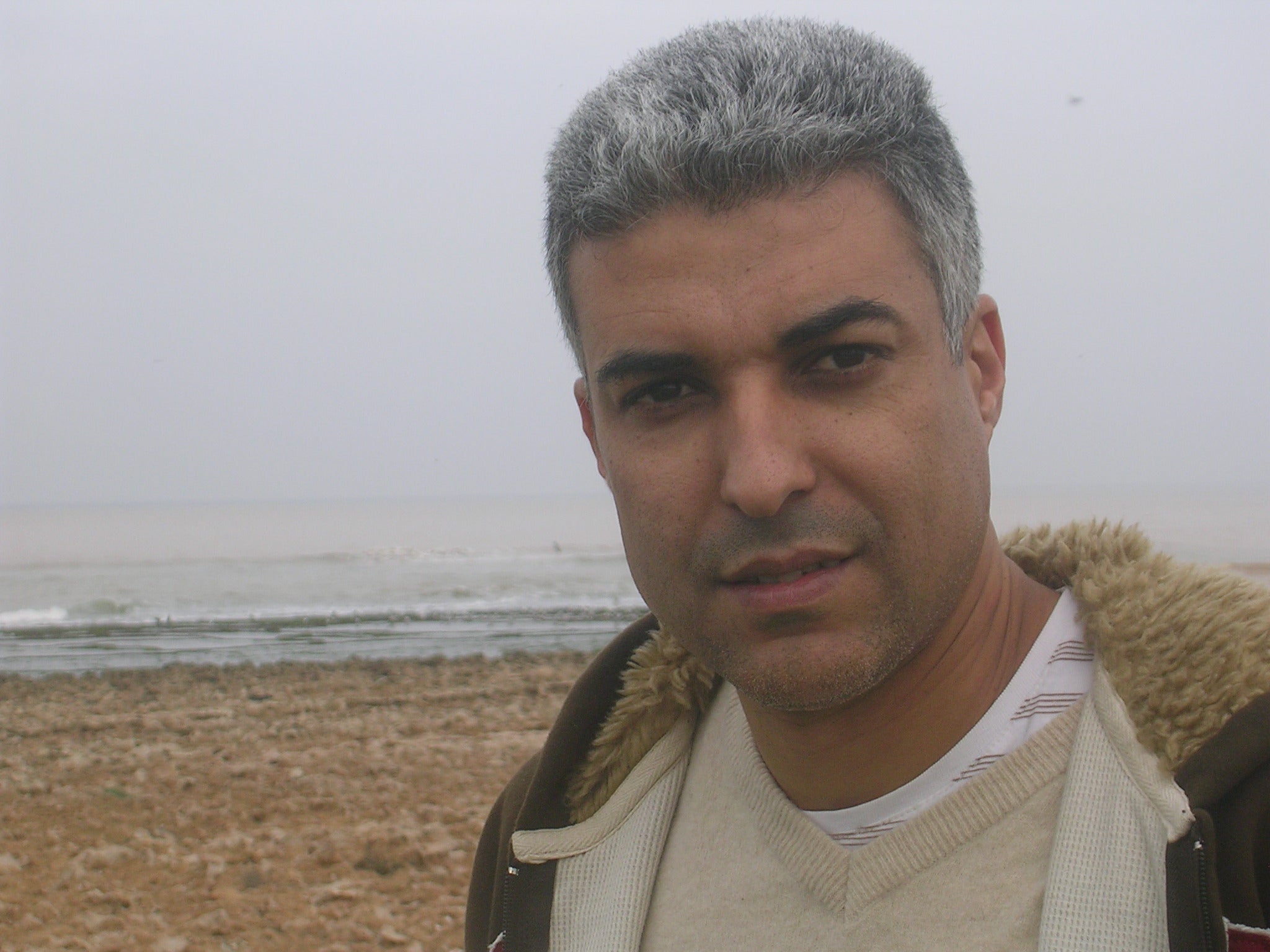
- Journalist Omar Brouksy © 2012 Omar Brouksy
A country that respects freedom of expression should not be yanking press cards for mentioning the monarchy in the ‘wrong’ context or shutting down news bureaus because it dislikes their coverage.
(Rabat) – Moroccan authorities should restore the accreditation of Agence France-Presse (AFP) journalist Omar Brouksy and stop retaliating against foreign media for what they report. On October 4, 2012, authorities withdrew Brouksy’s accreditation, citing an article published that day about an election contest in which Brouksy noted that the founder of one political party was close to the royal palace.
October 29 will mark two years since authorities shut down the Morocco bureau of Al Jazeera television in response to its coverage of the disputed territory of Western Sahara. In a country where the two main languages are Arabic and French, Al Jazeera and the AFP are closely followed.
“A country that respects freedom of expression should not be yanking press cards for mentioning the monarchy in the ‘wrong’ context or shutting down news bureaus because it dislikes their coverage,” said Sarah Leah Whitson, Middle East and North Africa director at Human Rights Watch.
The AFP story by Brouksy concerned special elections for three parliamentary seats in districts where results had been invalidated in the November 2011 general elections. His article described the contest in Tangiers as primarily between the Islamist Party of Justice and Development, which won a plurality in the general elections, and “candidates close to the royal palace running under the banner of the Party of Authenticity and Modernity, founded in 2008 by Fouad Ali el-Himma, who is close to King Mohammed VI.” The article also referred to “a power struggle between the government and the royal palace.”
Communications Minister Moustapha Khalfi, the government spokesman, said in an October 4 statement that the government was rescinding Brouksy’s accreditation because of an “anti-professional dispatch” that contained “statements implicating the institution of the monarchy in this election contest,” thereby “undermining” the monarchy’s “neutrality and role as referee above all electoral competition between political formations.”
The next day, Khalfi told the AFP that Brouksy had disregarded the regulations governing journalists, in particular an article requiring that they “respect national sovereignty, professional rules, and the laws in effect.”
The AFP stood by Brouksy’s article and justified the passage in question as providing context for the election.
“Even if the journalist had in fact questioned the palace’s neutrality in this election, it would not justify a sanction from the government, much less one as drastic as taking away his accreditation,” Whitson said.
Without accreditation, a journalist risks being denied entry to government news conferences and being unable to obtain comments from government officials or to renew his press card. Morocco should revise its regulations to prohibit the government from using arbitrary criteria, especially any that can be used to punish political commentary, to rescind press accreditation, Human Rights Watch said.
In 2011, the United Nations Human Rights Committee, which is considered the authoritative interpreter of the International Covenant on Civil and Political Rights (ICCPR), held in its General Comment 34, “Limited accreditation schemes are permissible only where necessary to provide journalists with privileged access to certain places and/or events. Such schemes should be applied in a manner that is non-discriminatory and compatible with article 19 and other provisions of the [ICCPR], based on objective criteria and taking into account that journalism is a function shared by a wide range of actors.”
The press code provides prison terms for a number of nonviolent speech offenses, including, in article 41, for any “offense” directed at the king or the royal princes or princesses, or speech that “harms” the institution of the monarchy, the Islamic religion, or Morocco’s “territorial integrity.” The latter usually is applied to disputing Morocco’s claim of sovereignty over Western Sahara.
On October 29, 2010, Moroccan authorities ordered the closure of Al Jazeera’s Rabat bureau after withdrawing the accreditation of eight of its Morocco-based correspondents over the previous two years. The channel had, according to an official statement, “seriously distorted Morocco's image and manifestly damaged its greater interests, most notably its territorial integrity,” an apparent allusion to Western Sahara.
In January, a new government led by the Party of Justice and Development took office following its victory in legislative elections. Khalfi, the new minister of communications and government spokesman, told Human Rights Watch on April 4, 2012, that he expected to resolve the problem of Al Jazeera so that it could operate again in Morocco; Al Jazeera confirmed that it had held discussions with Moroccan authorities. However, six months later, the station’s Rabat bureau remains shut and Al Jazeera is forced to prepare its reports on Morocco from its head office in Doha, Qatar.
This is not the first time that authorities have withheld accreditation from Brouksy, who is a Moroccan citizen. After the AFP hired him to report for its Rabat bureau in March 2010, authorities refused, without explanation, to accredit him for nearly one year. Some Moroccan observers speculated in the press that the ministry objected to his previous journalistic work as editor-in-chief and a reporter forLe Journal Hebdomadaire, Morocco's most outspoken news organ before it closed. He wrote articles critical of the country's political leadership, including King Mohammed VI and those close to him.
“With Al Jazeera now able to report from post-revolution Tunisia and Libya, Morocco finds itself among the shrinking club of governments in the region that bans Al Jazeera,” Whitson said. “It should exit that club and stop trying to control how journalists cover sensitive subjects like the monarchy and Western Sahara.”


