Saturday, November 17, 2012

Chinese petitioners claim hotel used as 'black jail'


Chinese policemen guard Tiananmen Square in March ahead of the National People's Congress, which the petitioners claim they were prevented to attend.


Shanghai (CNN) -- The only souvenir that Xie Jinghua has from her stay at a Holiday Inn Express located in a vast tourism park alongside the East China Sea is a room key.
The 52-year-old said she was not able to buy any of the beach toys in the lobby, walk around a lake nearby, or enjoy the ocean just outside of her window. Xie was there, she said, because she was forced to be - held in a hotel room for eight days after she and her 56-year-old husband, Ma Haiming, traveled to Beijing in March to protest the compensation they were given for the demolition of the family's farmhouse to make way for the expansion of Shanghai's Pudong International Airport in 2005. When the couple arrived in Beijing, Xie said they were picked up by plain clothes police and forced to travel hundreds of miles back to Shanghai, then held separately at the hotel.
"I really felt quite sick inside," said Xie, who now lives in a tiny apartment near the airport where her son works as a janitor. Xie said she tried to escape from her third floor hotel room on March 10 via its balcony but was stopped by at least seven guards who, she said, "put me on the bed and used the bedspread" to hold her down. She said she stole the room key when a guard was not looking.
Xie and her husband were not alone. Three other people have told CNN they were held against their will at the Holiday Inn Express Nanhuizui - located in Lingang New City on the outskirts of Shanghai - to keep them from airing grievances to the central government during the 10-day annual meeting of China's legislature in March. The hotel management and owners deny their claims.
But people being detained without charge is nothing new in China, according to Human Rights Watch, which says authorities use hotels, homeless shelters, mental health facilities, farmhouses and obscure government compounds as so-called "black jails" -- unofficial prisons where Chinese officials hold citizens without charge.
However activists say this is the first time a facility run by a western company has been allegedly used for these unofficial detentions.

 Petitioners claim they were evicted from their land for expansion of the Pudong International Airport. 
Petitioners claim they were evicted from their land for expansion of the Pudong International Airport.


"I have not come across an American branded hotel being used as a black jail," said Phelim Kine, a senior Asia researcher with the New York-based Human Rights Watch. "That is a first, and it is noteworthy."
The InterContinental Hotels Group (IHG), the UK-based firm that owns the Holiday Inn Express brand, said there was no indication that guests at the hotel were being held against their will last March.
I have not come across an American branded hotel being used as a black jail ... that is a first, and it is noteworthy
Phelim Kine, Human Rights Watch
"We have found no evidence which would confirm these accusations or any sign that the hotel owner knew or cooperated with (the) government on this hotel stay and the hotel is operated in accordance with PRC [People's Republic of China] local laws and regulations," IHG said in a statement, noting that it had conducted a "thorough investigation" of the allegations. "As you'll appreciate, we can't provide details of the booking or guests due to privacy laws."
'Black jails' in China
According to a 2009 Human Rights Watch report on China's alleged "black jails," local courts often refuse to take cases from residents who have complaints against local officials, which means petitioning Beijing is the only option those residents have.
But their trips to Beijing present a major problem for local officials, who face demotions or other forms of retribution from higher levels of government based on the number of petitioners who come to Beijing, according to Human Rights Watch. As a result, local governments intervene, abducting the petitioners either before they leave or once they arrive in Beijing, Kine said.
The forced detention of dissidents has become its own cottage industry as public security offices subcontract people to work for them who "are paid per head for each person that they abduct and hold," Kine added. "This is a huge grey economy."
As Communist Party officials meet this week to decide China's new leadership, outside will be people like Wang Yifeng and Fan Jianjiang who are petitioning government leaders directly for compensation after the demolition of their homes. Both Wang and Fan are among the five interviewed by CNN who said they attempted to make their case last March, but were intercepted by police who took them into custody and held them in the Holiday Inn Express Nanhuizui.
Human rights groups say detentions without charge are common, particularly during times of central government meetings. "We always expect that around significant political events that there will be a tightening of surveillance and control over key individuals who the government considers to be troublemakers," said Catherine Baber, director of Asia Pacific for Amnesty International. "But certainly in the lead up to the transition, there is a growing list of people who are under house arrest."
We have found no evidence which would confirm these accusations
IHG statement
"Phenomenal resources are used for keeping tabs on [petitioners]," Baber said. "Detaining them and bringing them back, putting them under surveillance, sending them to reeducation through labor [camps]."
A spokeswoman for IHG said that during the time in question a group of rooms were booked by a government official from the Pudong district of Shanghai. That area is home to the five alleged detainees. They say their movements are constantly monitored by security officials in their home district after years of appealing for better compensation for their properties. According to the five, local officials have either intercepted them before they arrived in Beijing to make their petitions or tracked them down in the capital and sent them on the 665-mile journey back to the Shanghai area, where they were held.
An official at the Petition Bureau of Zhuqiao Town, home of the five petitioners, denied their claims. "I don't know what you are talking about, our channels of petitioning are open," said the official, who declined to give his name when he was reached by phone. "There's no such thing."
CNN contacted China's Ministry of Public Security on November 5 for a response to these claims, but there has not yet been a reply. However, in the past, Beijing has denied the existence of so-called "black jails" in China. The central government also last year issued new regulations outlawing violent forced eviction and offering new protections, including fair compensation.
'Violent forced evictions'
But rights groups say problems remain. "Violent forced evictions in China are on the rise as local authorities seek to offset huge debts by seizing and then selling off land in suspect deals with property developers," according to an October report by Amnesty International, called "Standing Their Ground."
 he 85-page report also said there is ineffective redress for Chinese citizens like Xie and her husband, who - without cash to hire legal help - petition the central government directly with local grievances that range from allegations of illegal land seizures and forced evictions to corruption and abuse from local authorities. They often face weeks or sometimes years of forced detentions without charge, human rights groups say.
"From our research and research from domestic Chinese human rights [groups], they are held from a few days to several months and routinely subjected to physical abuse, sleep deprivation and very often they have to buy their way out of custody," Kine said. "The government has denied there are any such black jail facilities in China. Even though [Chinese] state media run stories about black jails, there is an official disconnect."
Baber at Amnesty International said it is hard to quantify the number of people who are detained illegally in China, but "it is a large phenomenon," she said. "Just from the volume of people who put their energies into pursuing petitioning and continue to do so. It will be a large problem still."
Petitioner: Kept under guard
Xie said there were several guards posted outside of her Holiday Inn Express room and two women who were living in the room with her whose job was to monitor her.
She said while held at the hotel, she was told she would be given "classes about petitioner regulations." But there were no classes, she added. Xie took a reporter to the hotel to show where she was allegedly detained. The rooms were neatly furnished, with a flat screen TV and abstract art hanging on the walls.
When the front desk worker was asked whether they were aware people had allegedly been held against their will in the hotel, the employee said there were a number of guests who were staying in their rooms and were not leaving, and there were people standing outside their room, but that they had no idea why.
Violent forced evictions in China are on the rise as local authorities seek to offset huge debts
Amnesty International report
IHG said they interviewed all employees at the hotel in June after being first contacted by CNN, none of whom confirmed this story. A review of hotel security tapes was impossible, the hotel said, because recordings are erased after one month. The hotel had the employees sign affidavits attesting to their version of events, a hotel spokeswoman said.
"IHG is committed to operating our company with integrity and we have a Human Rights Policy applicable across the business. We have signed up to the UN Global Compact, aligning our operations and strategies with the ten universal principles that include commitments to human rights and labor standards," IHG said in its statement. "Our staff is trained to handle different situations and were a situation to arise, our staff would report an incident to the relevant authorities and IHG."
China has become a leading market for the InterContinental Hotels Group, which owns the Holiday Inn Express, Intercontinental and Crowne Plaza brands. Greater China led its first half, with a 9.7% increase in revenue per available rooms. IHG, headquartered outside London, generates revenue from 181 hotels in greater China, with plans to open 160 more hotels, according to the company.
IHG's local partner in the hotel is Shanghai Harbor City Hotel Investment and Management Co.-- a subsidiary of Shanghai Harbor City Development Group. Like most of IHG's properties in China, a local partner legally owns the hotel but IHG manages the property. Zhu Gang, a manager with Shanghai Harbor City Development, said the company "knows nothing about" people being detained at the Holiday Inn Express. "No violence happened in the hotel," he said.

Researcher Jack Zhang contributed to this story


Will China's warships trigger arms race with Japan?


After two months of Chinese incursions into Japanese-controlled waters in the East China Sea, President Hu Jintao has stated explicitly that China intends to become a maritime military power.
There is growing alarm in Japan, and growing support for right-wing politicians. Some of them are calling for a radical reassessment of relations with China - even for Japan to develop a nuclear deterrent.
Rupert Wingfield Hayes reports from Tokyo.

http://www.bbc.co.uk/news/world-asia-20320669

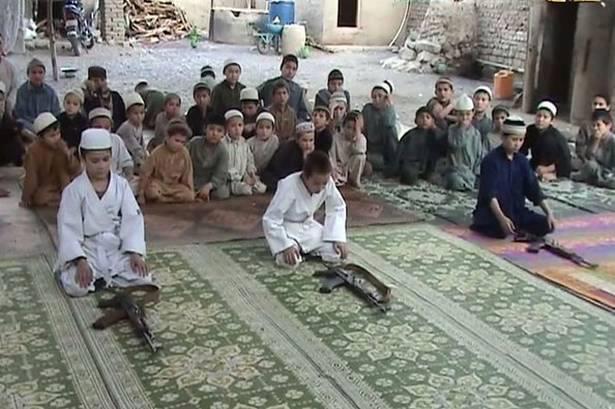
This is how a day begins in a Pakistan Madrassah under the watchful eyes of Pakistan military and the ISI.

National Remembrance Day: glowing tributes paid to Baloch martyrs of liberation

National Remembrance Day: glowing tributes paid to Baloch martyrs of liberation

<a href='http://balochwarna.com/features/articles.18/Pakistan039s-secret-dirty-war.html'>Pakistan's secret dirty war</a>

Quetta :

Baloch nation stood united to remember the fallen heroes of liberation struggle on 13 of November (Tuesday).

Memorial gatherings were held across Balochistan and many cities of world to pay tributes to Baloch martyrs and those languishing in prisons cells of Pakistan and Iran.

In a show of unity and solidarity with families of Baloch political prisoners the Baloch nation has observed 13 of November as the National Day of Remembrance for Baloch Martyrs. References, protests and gathering were organised across Balochistan.

In most area people have arranged the gathering and took to street voluntarily, shops and businesses were closed in Punjgur town of Balochistan to express their support with Baloch Martyrs Day. A reference meeting for martyrs was also held in the town. Addressing the gathering the organisers said Baloch fallen heroes gave the ultimate price of their lives for the establishment of a free, democratic and united Balochistan so that next Baloch generations could live a dignified and prosperous life.

The speakers said Baloch Liberation Charter was an opportunity and the need of time to present the sketch of liberated Balochistan. They appealed the Baloch leaders to make the charter public as soon as possible so that the nation can also give their inputs and become a part of it.

Baloch residents of Hub, the industrials town of Balochistan, and Lasbela town also took out rallies in support of Baloch Martyrs Day. Hub town remained close thoughout the day all the official buildings and public business were also closed. A large number of people including women and children took out a protest march from Mondra Chowk to Lasbela Press Club. The participants of rally chanted slogans against occupying state and held pictures of their loved ones killed by Pakistani security forces and state’s proxy organisations.

Meanwhile different regional zones of BSO-Azad arranged references and rallies in many towns of Balochistan and Karachi.

Public remembrance meetings were held in Panjgur, Mashkay, Turbat, Kharan, Mastung, Kalat, Monguchar, Surab, Khuzdar, besima, Noshki, Mach, Gardab, Dera Ghazi Khan and Siyah Gazzi, Peerandar, Teer Tayj region of Awaran Balochistan. Baloch women, children and elderly have participated in the protest rallies, reference meetings to show their support for Baloch Martyrs’ families and Baloch national struggle. The International Voice for Baloch Missing Persons had appealed the nation to observe 13 of November as the National Remembrance Day for Baloch Martyrs. The Voice for Baloch Missing Persons (Balochistan), BSO-Azad, Baloch Four Party Alliance, Bugti Patriots of Motherland, BNV and other pro-freedom organisation has supported and endorsed the appeal of IVBMP.

Separately, the Baloch resistance organisation BLA had also urged the nation to remember their heroes of liberation struggle.

The speakers in different reference gathering said the Baloch nation gained recognition in the world because of the sacrifices of Baloch martyrs. “Today this region is known as Balochistan because of the struggle and sacrifices of Baloch martyrs. Those nations that surrendered to enemy forces and did not protect their national pride or identity, they are none-existence on the map of world today.” The Baloch nation instead of accepting the slavery of occupiers, have kept resisting their hegemony.

Meanwhile references and memorials were also held in different cities of world including London, Germany, Sweden, and Kabul and Nimroz in Afghanistan. The Baloch community in Canada will be observing the martyr’s day on 18 November as they could not held it on 13 of November due to busy schedules during week days

Monday, November 12, 2012

Baloch nation prepares for National Remembrance Day for Baloch Martyrs

Baloch nation prepares for National Remembrance Day for Baloch Martyrs


<a href='http://balochwarna.com/features/articles.18/Pakistan039s-secret-dirty-war.html'>Pakistan's secret dirty war</a>

Quetta :

Baloch pro-independence parties in Balochistan and exile appealed the nation on Saturday to observe 13 November as the Baloch Martyrs Day.

In their separate statements of the Voice for Baloch Missing Persons, Bugti Patriots of Motherland, The Baloch National Voice and Baloch Four Party Alliance announced to support the call to observe 13 of November as National Remembrance Day for Baloch Martyrs.

Earlier Baloch Student Organisation – Azad, IVBMP London, Sweden and BHRC &IVBMP Canada; and Baluch Verein Deutschland [Baloch Community Germany] had also announced to observe and support the National Remembrance Day.

Meanwhile Vice Chairman of the Voice for Baloch Missing Persons, Abdul Qadeer Baloch, urged the relatives of abducted Baloch activists, students and political activists to go to the protest camp of the Voice for Baloch Missing Persons, outside Quetta Press Club, on 13 November and show their solidarity with the families of enforced-disappeared and Martyred Baloch activists.

The Voice for Baloch Missing Persons’ protest for the release of enforced disappeared Baloch, and demand for the arrest of the perpetrators involved in kill and dump in Balochistan, entered 960th day on Saturday, at Quetta Press Club.

The Baloch National Voice in their statement said, “Martyrs of liberation sacrificed their lives for our better future and freedom of Balochistan. It is the struggle and sacrifices of Baloch freedom fighters, political prisoners and martyrs that introduced Baloch national identity to the world. Today the world powers are acknowledging the Baloch freedom movement because of endless sacrifices made by the patriot sons of Balochistan.”

The Baloch pro-freedom organisations said no nation has got their freedom as a gift neither have the international powers supported any liberation struggle against their vested interests. They further said, “Oppressed nations struggled and paid for freedom with their lives. The oppressed and occupied nations always relied on their own strength; similarly the Baloch nation should bring momentum and strength in their ranks and force their enemies to withdraw from Balochistan. Baloch should show to the world that they are able to gain and sustain their freedom, only then the international and regional powers will support the Baloch for their own safety and interests.”

The BNV said it was the responsibility of Baloch youth to preach the message of freedom to every household in Balochistan and make the nation aware about the curse of slavery. Baloch freedom loving forces should bring unity in their ranks and counter the conspiracies of enemy against Baloch struggle. The Baloch National Voice urged the Baloch nation to overcome all personal likes and dislikes and spend their energy to fulfil the dream of Baloch martyrs.

In a separate press release Wadera Rahmo Bugti the central leader of Bugti Muhabiyan e Watan (Bugti Patriots of Motherland) has announced to support the Baloch Martyrs Day on 13 November. “Today the Baloch have gained national and international recognition because of the sacrifices of Baloch martyrs and freedom fighters”, Mr Bugti said.

He said the unanimous announcement of Baloch resistance and pro-freedom political parties to observe 13 November as the Baloch Martyrs Day was a positive step and a good news for Baloch nation. “Those who believe in single programme of Balochistan’s freedom should intensify their effort to advance the Baloch national struggle instead of promoting personalities or organisations”, said Mr Bugti.

Rahmo Bugti said ‘Bugti Patriots of Motherland’ respects the sacrifices of Nawab Akbar Bugti, Mir Balach Marri and thousands of other Baloch martyrs. Those who believe in slogans of enemy and use self-made confusing terminologies to deter the liberation struggle will be considered as the enemy of Baloch and Balochistan, he added.

Friday, November 9, 2012

Obama Myanmar Visit Set For Later This Month, Official Says

Obama Myanmar Visit
President Barack Obama meets with Myanmar democracy leader Aung San Suu Kyi in the Oval Office of the White House, Wednesday, Sept. 19, 2012, in Washington. (AP Photo/Susan Walsh)

YANGON, Myanmar -- President Barack Obama will make a groundbreaking visit later this month to Myanmar, an official said Thursday, following through with his policy of rapprochement to encourage democracy in the Southeast Asian nation.
The Myanmar official speaking from the capital, Naypyitaw, said Thursday that security for a visit on Nov. 18 or 19 had been prepared, but the schedule was not final. He asked not to be named because he was not authorized to give information to the media.
The official said Obama would meet with opposition leader Aung San Suu Kyi as well as government officials including reformist President Thein Sein.
It would be the first-ever visit to Myanmar by an American president. U.S. officials have not yet announced any plans for a visit, which would come less than two weeks after Obama's election to a second term.
Obama's administration has sought to encourage the recent democratic progress under Thein Sein by easing sanctions applied against Myanmar's previous military regime.
Officials in nearby Thailand and Cambodia have already informally announced plans for visits by Obama that same week. Cambodia is hosting a summit meeting of the Association of Southeast Asian Nations, and Thailand is a longtime close U.S. ally.
The visit to Myanmar, also known as Burma, would be the culmination of a dramatic turnaround in relations with Washington as the country has shifted from five decades of ruinous military rule and shaken off the pariah status it had earned through its bloody suppression of democracy.
Obama's ending of the long-standing U.S. isolation of Myanmar's generals has played a part in coaxing them into political reforms that have unfolded with surprising speed in the past year. The U.S. has appointed a full ambassador and suspended sanctions to reward Myanmar for political prisoner releases and the election of Nobel laureate Suu Kyi to parliament.
From Myanmar's point of view, the lifting of sanctions is essential for boosting a lagging economy that was hurt not only by sanctions that curbed exports and foreign investment, but also by what had been a protectionist, centralized approach. Thein Sein's government has initiated major economic reforms in addition to political ones.

A procession of senior diplomats and world leaders have traveled to Myanmar, stopping both in the remote, opulent capital city, which was built by the former ruling junta, and at Suu Kyi's dilapidated lakeside villa in the main city of Yangon, where she spent 15 years under house arrest. New Zealand announced Thursday that Prime Minister John Key would visit Myanmar after attending the regional meetings in Cambodia.
The most senior U.S. official to visit was Hillary Rodham Clinton, who last December became the first U.S. secretary of state to travel to Myanmar in 56 years.
The Obama administration regards the political changes in Myanmar as a marquee achievement in its foreign policy, and one that could dilute the influence of China in a country that has a strategic location between South and Southeast Asia, regions of growing economic importance.
But exiled Myanmar activists and human rights groups are likely to criticize an Obama visit as premature, rewarding Thein Sein before his political and economic reforms have truly taken root. The military – still dominant and implicated in rights abuses – has failed to prevent vicious outbreaks of communal violence in the west of the country that have left scores dead.
http://www.huffingtonpost.com/2012/11/08/obama-myanmar-visit_n_2093157.html?utm_hp_ref=fb&src=sp&comm_ref=false#sb=1999054,b=facebook